Stanton Drew

img_1236-1
img_1235-1
img_1234-1
img_1232-1
img_1231-1
img_1239
img_1238
img_1237

The Stanton Drew stone circles are just outside the village of Stanton Drew in the English county of Somerset. The Great Circle, 113 metres in diameter is the second largest stone circle in Britain; it is considered to be one of the largest Neolithic monuments to have been built.

It is relevant to my research because it is an example of the ancient connection humans have had with objects. In this case it was rocks placed in circles, although it is still not fully understood why they were made they are thought to be places of worship that were the grounds for ceremonies and rituals – perhaps to commemorate the dead.

The Art Of Arranging

Taken from Absolutely Beautiful Things by Anna Spiro

She describes the art of arranging as therapeutic and something that was passed down from her mother. How she had initially thought it very strange and then come to understand there was something else going on on a deeper level than just arranging objects.

A Portable Shrine

When visiting the Masters of Japanese prints: Hokusai and Hiroshige landscapes exhibition in Bristol I noticed that one of the prints contained a reference to a shrine.

No.43 Tsumagome, 1835-42

The idea that a shrine can be portable is striking because it shows the significance not in the place of the shrine but in the objects it contains and the attachments we have to these.

Noticing Personal Shrines

A collection of items that my boyfriend had placed on the shelf directly opposite his bed. The placement is interesting as this is something he would look at last thing at night and first thing in the morning. I think it represents music, and his history. A reminder of himself to himself?
A collection of things in my friends bedroom. A photograph of her grandparents is accompanied by a candle, a plant I gave to her, her favourite jewellery and an elephant statue she received as a gift. She had placed these things in the centre of her mantle piece.
A shrine like shelf in a restaurant I visited. Even something as simple as a picture with a candle in front of it I think can be significant. The We Can Do It poster is an interesting contrast to the Ganesha – a powerful mixture of traditional and modern imagery.

The above is a collection of objects that belongs to my brothers girlfriend. After discussing my project with her she said she did not have a shrine or anything like it, but my brother then pulled down her ‘memory box’ from his shelf. It was full to the brim of old tickets, photos, drawings and letters that she had kept hold of. She is Portuguese and moved to England with minimal things but this small case of things was something she had brought with her. It is not on display but I asked her about why she had it and she said that it was for memories, she said that there was a certain fear of forgetting happy times in her life and this was a way of keeping hold of them.

It is very interesting that the majority of people I have spoken to initially do not think they have any kind of shrine but on further investigation realise that they have some form of one. It is often a natural, subconscious action.

I am thinking of using photography to explore personal shrines. It could be an interview style photography project where I look into personal spaces – mostly within home environments and record a range of ways people use displays to express themselves. I would have short interview pieces alongside the photographs as well as pictures of the people and try to convey the connection between the individual, their space and how this reflects their world.

Around The World

The history of shrines spans back nearly as far as human civilisation does, with some of the first recorded man made structures like the Megalithic Temples of Malta thought to be religious places of worship.

Due to the breadth of the subject I will mainly focus this research on domestic shrines and also include examples of secular shrines which are of more interest to this project.

Hinduism

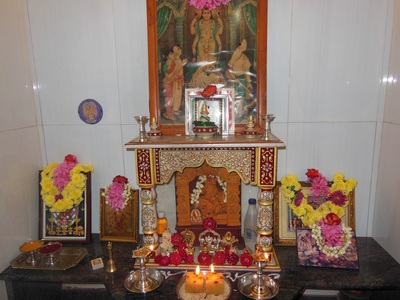
  • In homes, many Hindus have a shrine (a cabinet shelf or a room) to put up pictures or statues of deities.
  • In these shrines, oil lamps and incense sticks are lit, mantras are recited, and offerings of food are made.
  • Family members often perform these rituals together and treat the family deity with hospitality.
Home Kamidana | www.pixshark.com - Images Galleries With A ...

Kamidana

  • (Japanese: “god-shelf”), in the Shinto religion of Japan.
  • A miniature shrine, the centre of daily worship in a household or a shop. Usually a small cupboard or shelf.
  • It must be above an ordinary person’s eye level.
  • Accessories usually include two small saucers, a lidded bowl, two mizuire (vase-like lidded sake jars), two vases, and two candle holders. Excepting the candle holders, these are usually of white ceramic. The candle holders are usually of black metal. There is also often two Chinese style ceramic vases and/or a kagami (a disk of polished metal, held in a wooden stand).
  • Offerings include two sprigs of sakaki (can be substituted for other plant branches), salt, rice, water, and sake. White candles are also used for the shrine.
Related image

Catholicism

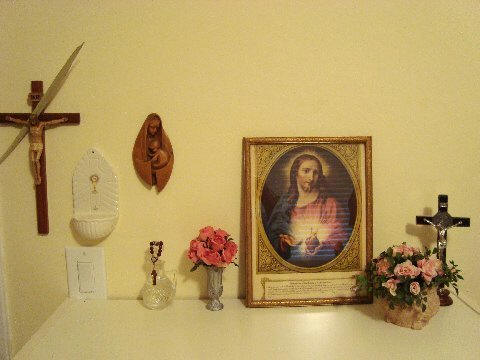
  • Long before Christians built churches for public prayer, they worshipped daily in their homes
  • These shrines often contain a crucifix, religious pictures (icons), Bible, holy water, lights, and flowers.
  • Erected on a shelf or table in the living or dining room, the family assembles there before or after meals at day’s beginning and at day’s ending.
Image result for day of the dead shrine

Day of The Dead Shrines

  • Every November 2, known as the Day of the Dead or All Souls’ Day, Hispanics across the Southwest transform grave sites, offices, and corners of their homes into vibrant memorials for their deceased loved ones by assembling multitiered ofrendas, or altars.
  • Altars are also meant to welcome returning spirits.
  • A large photograph of the loved one is the centerpiece. Smaller, informal snapshots can also be included.
  • Water, fruit punch and food is offered at the shrines. Salt, a symbol of purification, is for the dead to season the food you’ve offered him.
  • • The deceased’s favorite knickknacks, food, or tools (if he was a barber, for example, his straight razor, foam brush, and scissors) create a familiar setting for his return.
  • Marigolds grow and wilt quickly, reflecting the fleeting nature of life. Their aroma helps lure a spirit back.
  • Black represents death, purple means grief or mourning, pink is for celebration, white symbolizes hope, and yellow stands in for the sun.
  • Four candles at the top represent the cardinal directions and provide a lighted path to this world.
  • Burning copal is a holdover tradition from the Aztecs, who used the incense as an offering to the gods. It is still used in Catholic funeral masses.
Image result for david bowie shrine

Spontaneous Shrines

  • A term first used by scholars Jack Santino and Sylvia Grider to describe the collections of condolence materials left at sites of death or tragedy.
  • Often found when famous figures die, like the David Bowie Shrine in London as well as John Lennon and Michael Jackson.
  • These figures are almost treated as Gods or religious icons in their deaths and the shrines represent a communal mourning.
  • These types of shrines could also appear where a person has died in a shocking or public place and the candles and flowers will appear here to mark the death and act as a sign of respect.
voodoo_ceremony
Voodoo Alter in new Orleans

Voodoo Shrines – New Orleans

  • Originating in the West African country of Benin, the spiritual life of Voodoo came to New Orleans with the slave trade.
  • The name “Voodoo” evolved from the Fon word Voudon, meaning “spirit” or “deity”.
  • Gris-Gris are a voodoo object used to provoke magic and describes the act itself. 
  • Rituals or objects used to convey magical protection
  • The use of fetishes, or objects meant to contain the essence or power of particular spirits
  • Divination using the interpretation of physical activities, like tossing seed hulls or pulling a stone of a certain color from a tree
  • The association of colors, foods, plants and other items with specific loa and the use of these items to pay tribute to the loa.


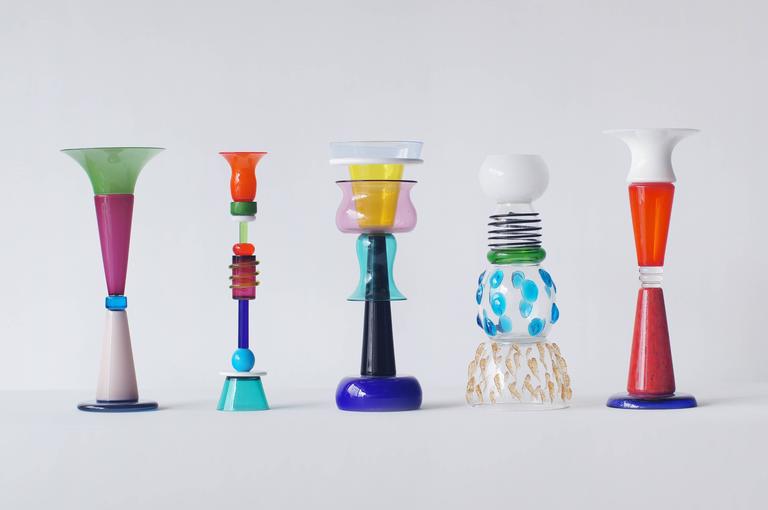
Ettore Sottsass

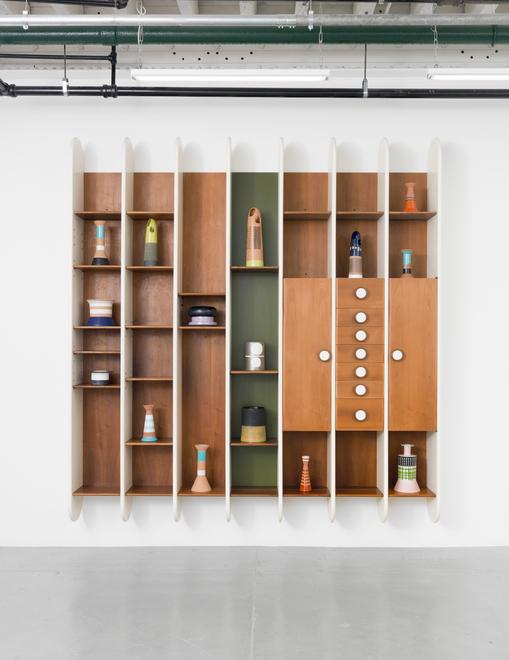
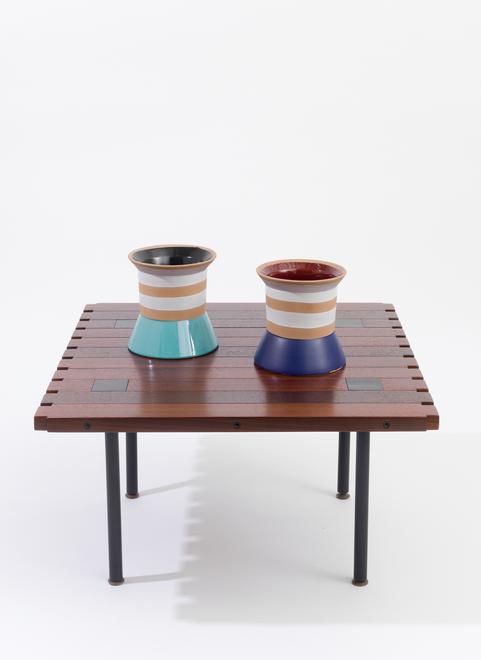
Sottsass is an architect and designer born in 1917, most famously associated with the Memphis design movement. Sottsass was motivated by a desire to reach deeper beneath the surface of the objects he designed. His design principal was to achieve a greater connection to the world around us.

“Ettore thought that design should help people become more aware of their existence: the space they live in, how to arrange it and their own presence in it,” explained Radice. “That was the core of Ettore.”

This was probably sparked by his time travelling India with Allen Ginsberg. It had a spiritual impact on him. “In India I found very strongly a sort of dimension of sacrality. Every object could become something so related to your life that it becomes [part of] your vision of la sacralità [the sacred],” said Sottsass.

This interpretation of the world I find relevant to what I have discovered looking at shrines. The strong connection between the physical and the sensual is what I think has intrigued me. They are often the meeting point. We are prone to projecting something onto an object – a feeling, a memory or a story. I hope to be able to utilise this concept within my own work.

Sottsass_Library_with_Vases_lrg0
_Sottsass_Pair_of_large_Rocchetti_Vases_lrg0
Related image
Image result for sottsass

Shrine – A Definition

noun\ ˈshrīn, especially Southern ˈsrīn\

Definition of shrine

 1a: a case, box, or receptacle especiallyone in which sacred relics (such as the bones of a saint) are deposited
b: a place in which devotion is paid to a saint or deity SANCTUARY
c: a niche containing a religious image
2: a receptacle (such as a tomb) for the dead
3: a place or object hallowed by its associations

(Latin: scrinium “case or chest for books or papers”; Old French: escrin “box or case”)

I think at this point it is important to refer back to the actual definition and analyse what the word means in the context of this project. I think the fact that it is a receptacle is very important as it is a broadly used term with very personal connotations. Over all the shrine is a container, something that has taken many shapes and forms. Most often in history it is religious, but the term also stands with out a specific religion attached – as a secular shrine.

Sacred can also mean cherished. Something that holds an importance or hidden meaning. A secular shrine for instance may not have obvious or more widely understood meaning like a religious shrine does, yet it does not mean that it is any less righteous. It may just be that personal context is needed to unlock this understanding – like my shelf – things which to an outsider may look trivial hold immense value to me and are cherished in every sense of the term.

I will talk about a shrine in this broader sense – a receptacle that holds greater meaning, whether that be religious or secular – it in my mind does not differ so much. It is a place we use to delve into deeper understandings and spiritual connections. The word sanctuary I think is relevant here – a safe place of refuge.

My Shrine Shelf

On returning home I reflected on my own space and noticed that my home had elements of a shrine, in a personal sense, specifically a high shelf in my bedroom. Interestingly, religious shrines and symbolism are often put in high places as a sign of respect and importance such as the Buddha. I remember reading that tattoo’s involving religious iconography should never be placed below the waist and also that the Quran should always be placed on the highest shelf.

I have never thought of myself as a religious person. This connection between the shrines in Thailand and my shelf at home has had a marked change of perspective for me. There are many aspects of religion that I can most definitely learn from and perhaps we all share the same need for a kind of clarity and understanding of life that can sometimes manifest as a religious belief, or sometimes not. This integral need to look outside of ourselves is something I think connects all humans.

My shelf is a collection of things that hold significance to me, something I think most people naturally do and something which is intrinsically within us – a need to bridge a gap between thoughts and feelings and the physical world. A need to reinforce a sense of self, to remember, to reflect or to worship out side of our own mind. I want to look at how and why people create these displays within spaces.

In an attempt to gain further understanding I will analyse some aspects of this display. The elephant candle was a gift from my oldest and best friend, it is important to me as it signifies the longevity of our relationship.

The clay pot was made by me and holds important pieces of jewellery that I own, mostly inherited from my late grandmother. The way these items are contained in something made by me reflects my need to hold on to her memory and acknowledging her as a part of me. The small tree ornament to the right was also hers and holds special memories of her and my childhood.

The blue and white ceramic pot was my mums, she always had blue china in the house when I was young and it reminds me of my home growing up. It is next to my favourite photograph of my father who has also passed away. I had not noticed before that it was at the centre of the shelf which is interesting as it may be the most important memory, or the one I most need to hold onto.

The dried flowers are gifts from my boyfriend that I have not wanted to get rid of, they still look beautiful now they are dry and they represent the growth of our relationship.

The records in the back are Nina Simone, Sade and Grace Jones. Not only are these some of my favourite records but they also represent strong female energy and are all women who’s music and art have in some small way shaped who I am. They are a reminder to me of strength and female power. They are all songs which hold fond memories and are a reminder of not only my past but my future.

The photograph of Frida Kahlo holds significance to me because she represents strong female energy. She is also an artist I admire and who inspires me. Looking at this photograph of her everyday is in a way a reminder of the person that I want to be – she signifies creativity and resilience.

The jar was something I found in a charity shop, I liked it because the cat looks like my own and I guess this represents them. The jar holds dried lavender which grew in my front garden growing up and reminds me of the house.

The other various pots and containers are things I have collected over the years, they hold small collected objects such as rocks from Brighton beach and shells from holidays. I also had placed saffron which I had purposely not put in my kitchen. It is interesting to think about the offerings of food and drinks that people made in the spirit houses in Thailand and that perhaps this was in a way some kind of offering.

None of these things had been done purposely, or I had not previously thought they’d been. I did not realise how much this shelf signified to me before starting this project – which seems very obvious but was not something I had actually thought about in depth before. The way I have collected these things and attached meaning to them is something I believe a lot of people do. I think that maybe I had looked to this as a support system or some kind of physical reassurance. I think that one of the most obvious ways people use shrines is for mourning. Perhaps grief is a motivating factor for spirituality – many people find religion comforting in testing times. Could shrines be the physical manifestation of this – a way we can connect with some deeper understanding of the world and our place within it when we feel lost?

So far there seems to be themes of memory, mourning, past present and future, power, a sense of self, relationships, representation and offerings.

Thailand

Photo’s of shrines and temples that I took during my time in Thailand.

A spirit house.
Flowers were often left at the shrines.

Symmetry.
Food and drink offerings at a shrine in the back of a jazz cafe.
Flower garlands being sold at the side of the road. Often used to decorate shrines.
Insence being burned at a small shrine at a temple.

Genesis

The ideas behind this project began in Thailand. My journey across the South was interesting in many ways but something which has stayed prominent in my thoughts since are the shrines. The way they dot the sides of busy high ways, sit upon fridges in restaurants and in gardens and shops. They were everywhere. When there I spoke to locals and discovered some of the shrines I saw were actually called spirit houses. There was something about their presence across the country that was magical to me.

Below are notes from further reading I have done online surrounding spirit houses in Asia:

Although Thailand is pre-dominantly Buddhist, there are many beliefs and customs which owe nothing to Buddhism, but have roots in Hindu and/or Animist beliefs.

Daily Offerings

  • Must be high enough to show respect, but low enough so they are in reach to make offerings.
  • Offerings can be in the form of incense, flowers, garlands, food and drinks.

Spirits

  • Spirits of the home (phi ruan) can be trusted to behave and therefore can reside in the family home.
  • Spirits of the land reside in the spirit houses.
  • Trusted spirits are thought to be deceased family members and they are accorded a special place in the home.
  • This is often on a shelf high up where fresh flowers and drinks will be provided.
  • Many of the ghosts that get up to no good are thought to be the spirits of dead people who failed to be reborn. 

Animism

Animism (from Latin anima, “breathspiritlife“)[1][2] is the religious belief that the “objects”, the ‘”places” and the “creatures” all possess a distinct spiritual essence.

Potentially, animism perceives all things—animals, plants, rocks, rivers, weather systems, human handiwork and perhaps even words—as animated and alive. Animism is used in the anthropology of religion as a term for the belief system of many indigenous peoples, especially in contrast to the relatively more recent development of organised religions.